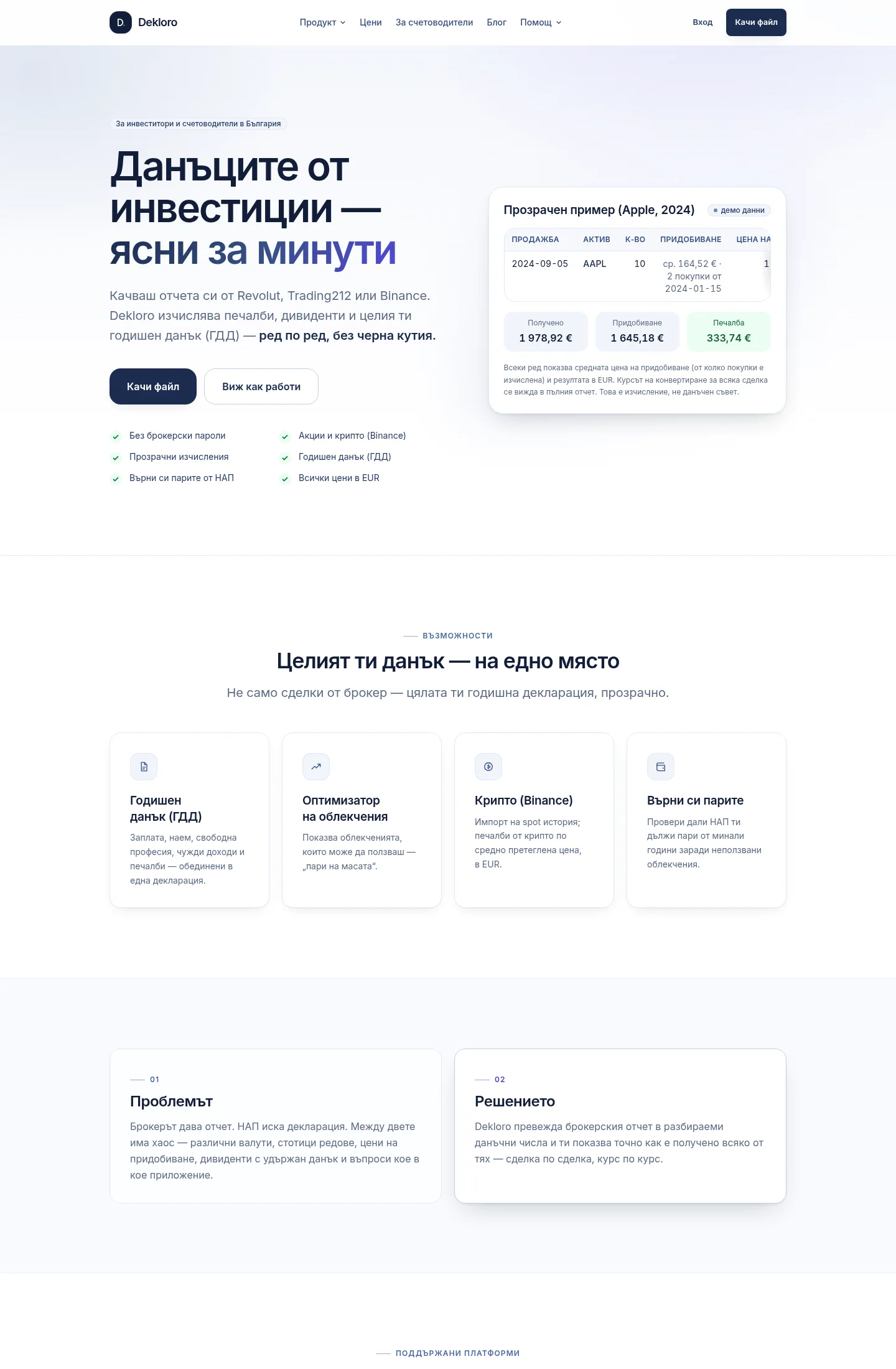

Dekloro works out Bulgarian tax on investments for people who hold accounts with Revolut, Trading 212 or Binance. Upload the report your broker already gives you and it produces the gains, dividends and crypto figures for the annual return, the ГДД, line by line. It is built for investors who file their own return and for their accountants.
What we built, and still run
We designed Dekloro, built it and host it. The question that shaped the design was how much of the calculation to show, and we chose all of it: every sale, the purchases it was matched against, the date and exchange rate of each, and the euro figure they add up to. A single total reads faster. But whoever signs a tax return wants to see where each number came from, and the accountant checking it works from the same rows.
The detailed view connects the source report to the result. An investor or accountant can check an individual transaction as well as the total.
Dekloro runs on our own servers, and we keep it updated and backed up. That is how we host what we build, and it never ties a client to us: the domain, the code and the content are theirs, and if they want their own hosting, we make the move with them.
What does Dekloro do for the person filing?
Dekloro turns a broker's report into figures a person can put on the Bulgarian return and explain if anyone asks. Four things make that possible:
- It reads the file you download from your broker, and never asks for a broker password or login.
- Every transaction is converted to euro at the rate for its own date, with the conversion shown on its line.
- Sales are matched to purchases first in, first out (FIFO), so each gain leads back to the purchases behind it.
- Gains, dividends and crypto are worked out separately, then gathered into the numbers the return asks for.
What it gives you is a calculation, not tax advice, and the site says so plainly.
Dekloro today
Dekloro is live at dekloro.com in Bulgarian. The project shows how we combine file processing with traceable calculations in custom software. It also appears in our guide to custom development versus off-the-shelf tools.